Energy Efficient Home Features That Sell Colorado Homes Faster
The typical argument for energy upgrades is simple: spend less on your utility bill. But buyers touring homes in Denver, Fort Collins, and across Colorado’s Front Range are asking something different these days. They want to know about solar production capacity, battery backup hours, and whether the home is EV-ready. They’re calculating operating costs, comparing how much they’d save on energy versus their current home, and factoring in whether the house is ready for the future.
Zillow’s 2026 Home Trends Report confirms what many sellers are already sensing.
- Listing mentions of zero-energy-ready homes rose 70% year over year.
- Whole-home battery mentions climbed 40%.
- EV charging references increased 25%.
- Broad sustainability terms appeared 21% more often than in the prior year.
This isn’t a trend driven by environmentalism alone. Rising electricity costs and unpredictable energy bills have pushed energy performance from a nice-to-have into a real buying criterion.
If you’re a Colorado homeowner weighing whether to invest in energy-efficient home features, the real estate market is sending a clear signal. These upgrades don’t just lower your bills. They make your home easier to sell, faster to move, and more competitive on price. Understanding which specific features buyers reward most, and why Colorado amplifies those returns, starts with the buyer behavior data.
Why Buyers Now Shop for Energy Performance
Today’s homebuyers are not just shopping for square footage and finishes. They’re evaluating operating costs, outage readiness, and a home’s readiness for an all-electric future. This shift has been building for years, and the numbers now make it undeniable.
According to Zillow’s 2026 Home Trends Report, zero-energy-ready home listings jumped 70% year over year, whole-home battery mentions rose 40%, and EV charging references climbed 25%. Sustainability language appeared 21% more often across for-sale listings. Zillow frames these numbers as evidence that energy efficiency is moving from a niche preference into a mainstream buyer value driver.
This matters for sellers because buyer attention translates directly into sales pace and price. Homes featuring energy-efficient features are drawing more interest, generating faster offers, and in many cases selling for more than expected. The real estate market is telling Colorado homeowners something worth hearing: energy performance is no longer a bonus. It’s a buying criterion that shapes how fast and how competitively your home sells.
If you’re curious how your home’s energy use stacks up before deciding where to invest, comparing your household’s energy consumption to similar homes is a practical first step that often reveals the highest-return opportunities.
What the Data Says About Features That Sell Faster
The fastest-selling energy-efficient home features fall into two categories: electrification and resilience features, and efficiency upgrades tied to renewable energy. Each category delivers measurable results in days on market and sale price, according to Zillow Research analysis of over 3.1 million home sales.
Electrification and Resilience Features
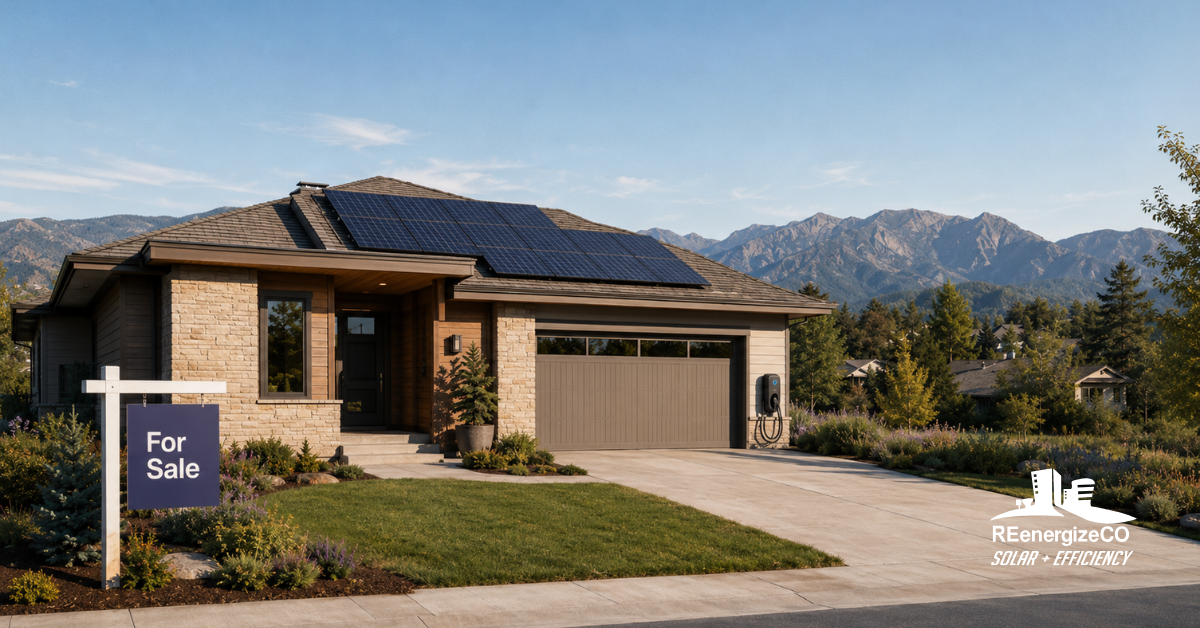
EV charging stations are the single biggest speed driver among all energy features studied.
Homes with EV charging mentioned in their listing sold an average of 9.5 days faster than comparable homes. As electric vehicle adoption accelerates, buyers are actively seeking homes that are ready for their next car purchase. Whole-home batteries, which provide energy storage and backup power during outages, are following the same trajectory, with battery backup systems growing 40% in listing mentions according to Zillow’s 2026 data. Both features signal resilience: the ability to keep the lights on and the car charged regardless of what the grid is doing.
Efficiency and Renewable Energy Features
Solar panels are associated with a 1.4% premium on sale prices.
On a $600,000 home, that’s roughly $8,400 more at closing. Double-pane energy-efficient windows, particularly those fitted with low-E (low emissivity) glass that reduces heat loss in winter and cooling costs in summer, helped homes sell 6.9 days faster and for 1% more than expected. Programmable thermostats contributed to homes selling up to 6 days faster. Energy-efficient lighting, including LED lights and smart home appliances, also moved the needle by reducing energy consumption and signaling lower utility bills to buyers who know what to look for.
These features share a common signal to buyers: lower heating and cooling costs, better air sealing, and infrastructure that keeps utility bills manageable for years. When you invest in solar panels and EV charging, energy-efficient windows, and smart thermostats, you’re shortening your time on market and strengthening your asking price. Buyers aren’t just glancing at these features. They’re making faster offers and paying premiums for homes that signal lower operating costs and modern energy infrastructure.
Why Colorado Homes Benefit Even More From Energy Upgrades?
Colorado’s climate amplifies the value of energy-efficient home features in ways that milder markets don’t experience. Front Range homes face temperature swings from 100°F+ summer days to sub-zero winter nights. Those extremes stress heating and cooling systems, proper insulation, and building envelopes far more than moderate climates require.
Altitude matters too. Colorado’s thinner, drier air creates unique air sealing and insulation challenges that lower-elevation homes don’t face. Homes at 5,000 to 8,000 feet lose conditioned air at different rates than those at sea level, making proper insulation a more significant performance factor here.
Buyers who understand building science put real weight on documented upgrades and ask for energy performance data before making offers. Reducing greenhouse gas emissions ranks alongside utility savings as a real buying priority for Colorado’s increasingly sustainability-conscious Front Range demographics.
The state also has structural advantages that make renewable energy sources particularly productive. With 300+ days of sunlight annually, Colorado’s passive solar design potential and solar panel output exceed most of the country. Xcel Energy’s time-of-use rate structures make battery storage and solar especially valuable, allowing homeowners to store energy when rates are low and draw from storage during peak demand. With Xcel Energy rate increases continuing in 2026, the economics of solar and storage grow stronger each year.
Grid reliability concerns along the Front Range have also made backup power a real priority for buyers. The Denver insulation and energy upgrades REenergizeCO installs are calibrated to Colorado’s altitude, climate, and utility structures. Colorado’s climate extremes, abundant sunshine, and evolving utility rates mean energy upgrades deliver outsized returns here compared to milder markets.
The Whole-Home Approach for Maximum Home Value
Individual upgrades help, but the homes drawing the most buyer attention are the ones where every system works together. An energy-efficient home that combines proper insulation, an efficient HVAC system, solar panels, and energy storage signals to buyers that nothing was left to chance. That complete picture commands the strongest premiums and the fastest sales.
The sequence matters as much as the individual upgrades. The U.S. Department of Energy reports that $200 to $400 of the average American’s annual energy spending goes to waste from drafts, air leaks around openings, and outdated heating and cooling systems. If you address heat loss and energy waste first, every upgrade that follows performs better. A professional energy audit identifies the highest-ROI improvements first, so you don’t install solar panels over an air-leaking building envelope.
The Xcel Energy Whole Home Efficiency Program follows the same logic, requiring at least three coordinated improvements to qualify for its largest bonus rebates. The program incentivizes the right sequence.
The recommended upgrade order is straightforward:
- Energy audit: identifies where heat loss and energy waste are happening and prioritizes fixes by ROI.
- Air sealing and insulation: closes the gaps with weather stripping, spray foam, and caulk, builds the thermal foundation, and reduces heating and cooling costs immediately.
- HVAC optimization: right-sizes your heating and cooling system to the actual load of the sealed, insulated house.
- Solar and battery: generates and stores renewable energy for a home that already uses less of it.
This whole-home approach is what REenergizeCO has practiced for over 15 years. Before adding solar or storage, start with a professional energy audit to build your upgrade sequence on a solid efficiency foundation, and position the result as a cohesive, documented story buyers can trust.
Start With a Home That Performs as Well as It Looks
Energy-efficient home features used to come up after the sale. Now they’re driving it. Buyers are arriving at showings with questions about solar capacity, battery backup hours, and insulation R-values. Homes that answer those questions with documented, verified upgrades sell faster and for more.
Colorado homeowners have an outsized opportunity here. The combination of 300+ sunny days, extreme temperature swings, and Xcel Energy’s evolving rate structures means every dollar invested in efficiency and renewable energy delivers more return than it would in most other markets.
The best starting point isn’t a product. It’s a process. A professional energy audit gives you a clear picture of where your home loses energy, which upgrades deliver the biggest impact, and how to sequence improvements so every dollar you invest makes the next upgrade more effective and more marketable. That foundation makes insulation, solar, and battery storage all tell a stronger story when it’s time to sell.
Schedule a home energy audit with REenergizeCO and get a full roadmap to a home that’s more comfortable, less expensive to run, and more competitive in any market.
Share on:
Get In Touch
By submitting this form, you consent to receive emails from REenergizeCO. You can unsubscribe at any time by clicking the link in the footer of our emails. Emails are serviced by Constant Contact.
Related Posts
Colorado Winter Outlook and What It Means for Your Home
Energy Audit ArticlesIf you've searched "Colorado winter outlook" recently, you've probably landed on a weather.gov PDF or a sk…
Read More »
Xcel Energy Battery Rebate: Up to $10,000 for Colorado Homeowners
Energy Audit ArticlesXcel Energy will pay you up to $10,000 to install a home battery. There's a catch: you have to be one of t…
Read More »
How Much Energy Do I Use Compared to My Neighbors?
Energy Audit ArticlesThat Xcel Energy neighbor comparison report just landed in your inbox. Your household is "above average." …
Read More »