
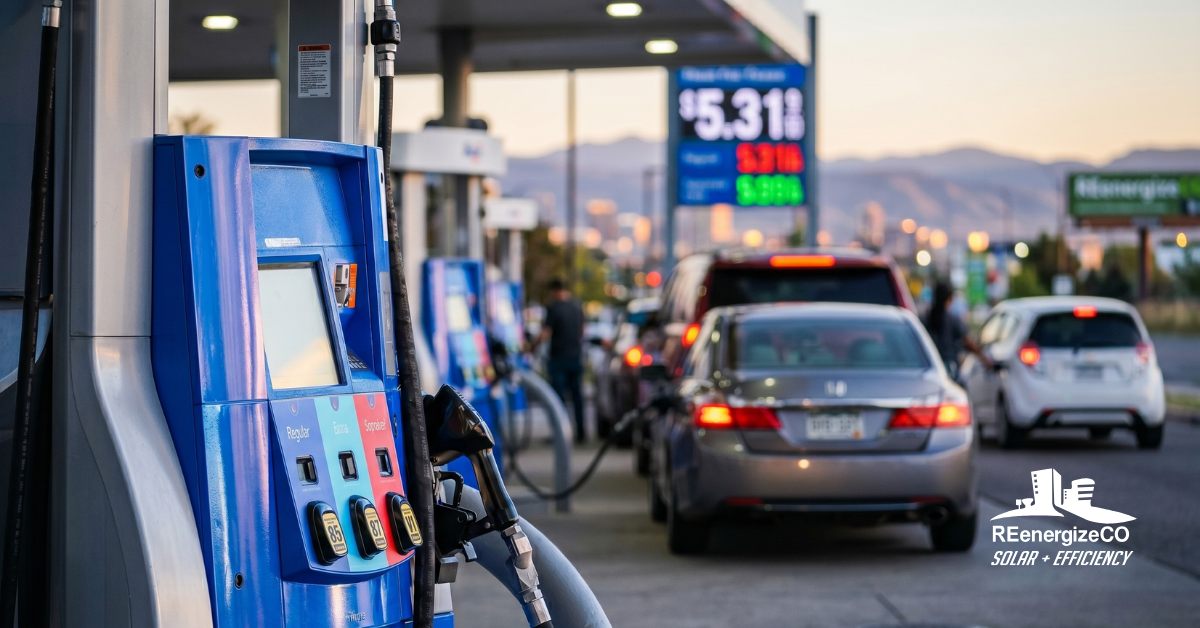
What E15 Gas Means for Colorado Drivers in 2026
Gas prices are climbing again in Colorado, and a new fuel is showing up at the pump right as your wallet feels the squeeze. It is called E15, and the pumps often label it Unleaded 88. It costs a few cents less per gallon, which sounds like good news until you read the headlines warning it will wreck your engine.
So which is it, a deal or a trap? The honest answer is neither. E15 is mostly safe, and the savings are mostly an illusion. The whole debate distracts from the real problem: gasoline prices you cannot control, no matter which blend you pour in.
Gas Prices Are Climbing Again in Colorado
Start with the number that actually hits your budget. Colorado regular gas sits at about $4.18 a gallon this spring, and the national summer forecast runs toward $4.80, near the highest prices on record. For a household driving 12,000 miles a year in a 30 mpg car, that is roughly $1,700 in fuel, and it swings with every oil-market headline.
Prices tend to climb every spring as refineries switch to summer blends and the driving season ramps up. Layer in crude oil volatility, refinery outages, and overseas conflict, and the pump number can jump 50 cents in a few weeks. Colorado drivers saw exactly that kind of spike in 2022, when prices touched $5 a gallon, and the forecasts for this summer carry the same risk.
That is the frustrating part. Gas prices are set by global crude markets, refinery margins, and geopolitics, none of which you control from your driveway. You can drive less, buy a thriftier car, or shop for a cheaper pump, but the price itself is out of your hands. A blend that shaves a few cents off does not change that.
This is the backdrop for the E15 conversation. When prices climb, cheaper-sounding fuel gets attention, and so do the scare stories that come with it. Both deserve a closer look before you change what you put in your tank.
What E15 Gas Is and Why It’s Suddenly Everywhere
E15 is gasoline blended with 15 percent ethanol, up from the 10 percent ethanol, or E10, that has been standard for years. The “88” you see on the pump is its octane rating, one notch above the 87 octane in regular gasoline, because ethanol naturally raises octane. Ethanol itself is corn-based alcohol, and federal policy has pushed steadily more of it into the nation’s fuel supply through the Renewable Fuel Standard.
Two things put E15 in front of you this year. First, the EPA cleared nationwide summer sale of E15 for the fifth year running, waiving the smog rules that normally limit it in warm months. Second, the House passed a year-round E15 bill in May, and it now waits on the Senate. If it passes, E15 becomes a permanent fixture instead of a seasonal one.
Behind the scenes, this is a policy fight, not a market one. The Renewable Fuel Standard sets record ethanol volumes for 2026 and 2027, which guarantees demand for corn ethanol whether or not drivers ask for it. Farm-state lawmakers and the corn lobby push to expand E15. Oil refiners push back. The lower price you see is partly the result of that mandate moving more ethanol into the supply, not a simple market deal.
Will E15 Gas Hurt Your Car?
This is where the headlines get loud and the facts get quiet. The claim that ethanol destroys engines is mostly false for modern cars. For any vehicle built since 2001, E15 is tested, approved, and safe.
The EPA approved E15 for 2001-and-newer vehicles after millions of miles of testing. A review of 43 separate studies found no engine durability problems compared with regular gas. More than 90 percent of cars on the road today are cleared to use it, and most automakers now approve it in writing. Your daily driver is almost certainly fine.
The damage warnings are real in one place: small engines and older equipment. Boats, motorcycles, lawnmowers, chainsaws, and pre-2001 vehicles can genuinely suffer from higher ethanol blends. They lack the materials and fuel systems modern cars use, and ethanol attracts water that corrodes them over a long winter in the garage. The rule of thumb is easy. Keep ethanol-free gas in the mower and the boat. Your 2018 crossover can run E15 without worry.
Why Cheaper Ethanol Gas Doesn’t Fix Your Fuel Budget?
Here is the catch the pump price hides. Ethanol holds less energy than gasoline, so a gallon of E15 moves your car slightly fewer miles than a gallon of regular. You burn a little more fuel to cover the same distance. The few cents you save per gallon get mostly eaten by the few extra gallons you buy.
So E15 is not a scam, but it is not real savings either. It is close to a wash. And that points at the deeper issue. Whether you pump E10, E15, or premium, you are still buying gasoline, and gasoline prices ride the same volatile oil market they always have. Switching blends is rearranging deck chairs. It does not change the fact that your fuel cost lurches up every time crude does.
That is the trap of the whole ethanol debate. It keeps the conversation stuck on which gasoline to buy, when the real money question is whether you have to buy gasoline at all. For a growing number of Colorado drivers, the answer is no, and the math is not close.
The One Fuel That Ignores Gas Prices and Ethanol
There is a fuel that does not care about ethanol blends, refinery outages, or oil prices: electricity. Charge an electric car at home overnight on Xcel’s off-peak rate of roughly 7 cents per kWh, and you pay about 3 cents a mile to drive. A 30-mpg gas car at $4.18 per gallon costs about 14 cents per mile. That is the same trip for roughly a fifth of the fuel cost.
The savings are real, and they are steady. A typical driver saves $1,000 to $1,300 a year on fuel, more for a long commute, and the home electricity rate barely moves while gas prices swing. The trick is simply charging overnight, when Xcel’s time-of-use rate drops well below the 5-to-9 p.m. peak.
The incentives are thinner than they were, but they are not gone. Vehicle Exchange Colorado pays income-qualified residents up to $9,000 toward a new EV or $6,000 toward a used one. The federal home charger credit covers 30 percent of a charger install, up to $1,000, but only through June 30, 2026. And the used market is full of off-lease EVs, with more than half listing under $30,000. You do not need a $55,000 truck to escape the pump.
You do need your home ready for it. Charging at home is an electrical project that starts with knowing what your panel can handle.
Run Your Own Numbers
The ethanol debate is a distraction from the figure that matters. About 14 cents a mile on gas you cannot control, against about 3 cents a mile on power you can. E15 will not close that gap, and neither blend frees you from prices set half a world away.
What changes the math is making your home the fuel station. That starts with your electrical panel and the rebates still on the table before the June 30 charger credit expires. A REenergizeCO home energy assessment scopes your panel, your charging options, and the incentives you qualify for. It pairs neatly with solar panels and battery storage if you want to power the car from your own roof.
Book one now, and stop letting the pump set your budget.
Share on:
Get In Touch
By submitting this form, you consent to receive emails from REenergizeCO. You can unsubscribe at any time by clicking the link in the footer of our emails. Emails are serviced by Constant Contact.
Related Posts
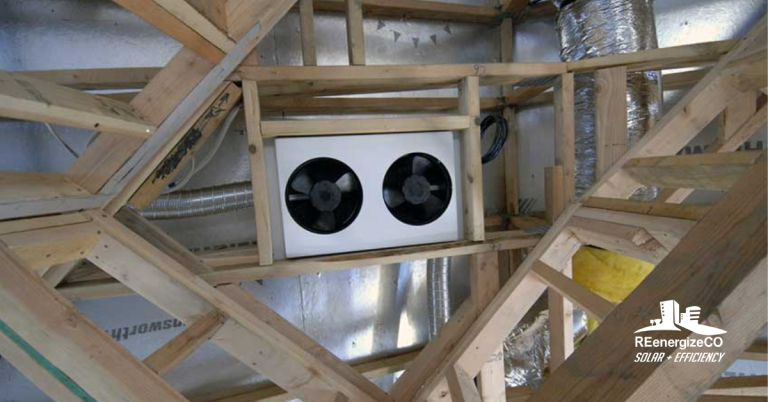
Whole House Fan vs. Air Conditioning
Articles on Energy SavingSpending a fortune on spring and summer air conditioning in your Colorado home? There's a better, cheaper …
Read More »
How to Keep Your House Cool in the Summer
Articles on Energy SavingBy mid-July, a Front Range home without a cooling strategy can hit 85°F indoors by noon, even with the air…
Read More »
Does Insulation Keep Heat Out During a Colorado Summer?
Articles on Energy SavingWith the growth and innovation happening in the insulation realm, we're confident that we can insulate you…
Read More »