Bidirectional EV Charging: The Future of Home Energy Management
Last winter, when your neighbor’s lights went dark during that three-day Colorado snowstorm, yours stayed on—powered by your car.
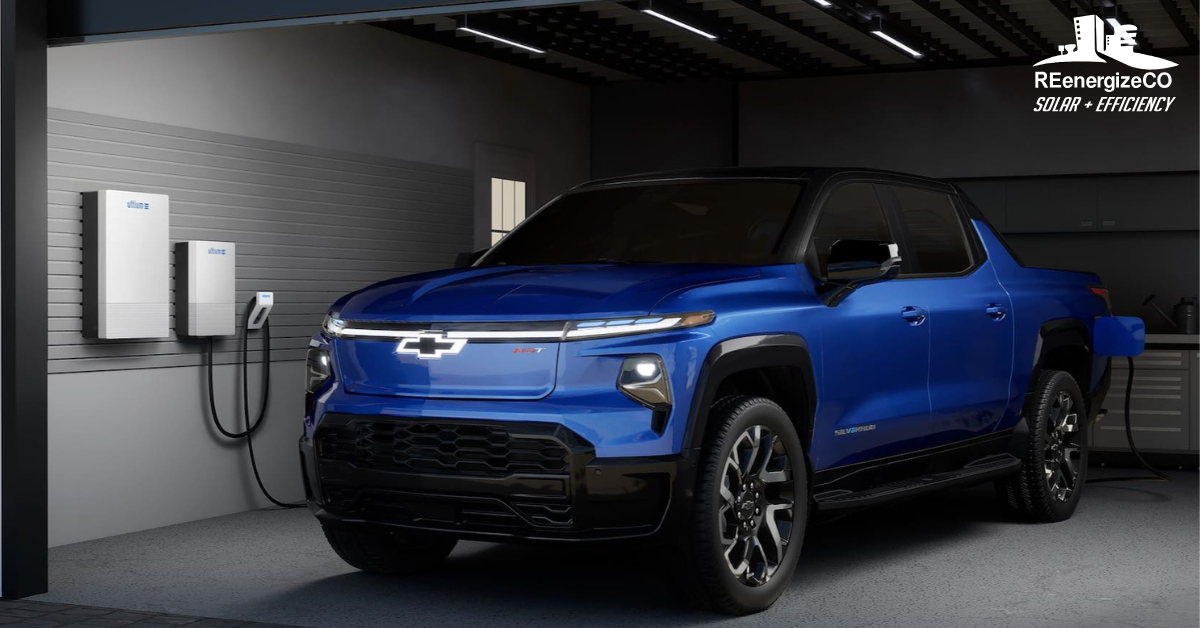
Your electric vehicle is no longer just transportation as it can now be your home’s backup generator, energy cost controller, and sustainability powerhouse all rolled into one. Bidirectional EV charging comes in two distinct forms that serve different purposes:
- Vehicle-to-Home (V2H): Systems that activate only during grid outages to provide backup power to your home
- Vehicle-to-Everything (V2X): Advanced systems that not only provide backup power but also manage energy costs, optimize charging based on electricity rates, and can interact with the grid
Think of it as giving your car a second job: by day, it takes you where you need to go; by night, it can serve different roles depending on which technology you’ve implemented. V2H systems stand ready to power your home during emergencies, while V2X systems actively work to reduce your electricity bills and strengthen the electric grid even under normal conditions.
As energy costs climb and weather patterns become increasingly unpredictable across Denver and the Front Range, these bidirectional charging technologies offer practical solutions that align with your financial goals and environmental values. By leveraging your electric vehicle’s battery, you can protect your home from power disruptions and potentially reduce monthly electricity bills while contributing to a more sustainable Colorado.
While V2H technology has been available for several years, V2X technology represents the cutting edge, with limited but growing availability in the market today.
How Bidirectional Charging Works
Vehicle-to-Home (V2H) Technology
V2H systems are explicitly designed for emergency backup power. These systems:
- Monitor grid status continuously
- Automatically detect when grid power is lost
- Immediately switch your home to draw power from your EV’s battery
- Power essential home circuits until grid power is restored
- Return to normal operation once grid power returns
The sophisticated power conversion systems in V2H chargers convert DC electricity from your vehicle’s battery into AC power that your home can use. The system seamlessly handles this transition, typically within milliseconds, ensuring your critical appliances and systems stay running without interruption.
Vehicle-to-Everything (V2X) Technology
V2X systems represent a more comprehensive approach to bidirectional charging. Beyond emergency backup, these advanced systems:
- Monitor electricity rates throughout the day
- Charge your vehicle when electricity costs are lowest
- Power your home using the vehicle’s battery during expensive peak hours
- Can participate in utility grid services programs
- Integrate with home energy management systems and solar installations
The heart of V2X technology lies in its smart controllers and communication protocols that ensure safe and efficient power transfer. These intelligent systems continuously monitor power quality, battery health, grid conditions, and electricity prices to optimize when to charge and discharge your vehicle’s battery.
Modern bidirectional chargers seamlessly integrate with your home’s electrical infrastructure. Advanced grid synchronization ensures your EV can safely supply power back to your home or the grid, depending on the system’s capabilities and settings.
The technology behind bidirectional charging opens new possibilities for managing your home’s energy consumption. During off-peak hours, your EV can store excess energy from solar panels or low-cost grid power. This stored energy can then be used during peak periods to reduce your energy costs and support grid stability through virtual power plant programs.
Benefits of Bidirectional EV Charging
The benefits of bidirectional charging vary depending on whether you’re using V2H or V2X technology:
Financial Benefits
With V2H systems:
- Elimination of the need for a separate home backup generator
- Protection from food spoilage and other costs associated with power outages
- Potential insurance benefits from maintaining home security systems during outages
With V2X systems:
- Your investment can lead to substantial savings through strategic power management. Recent studies show EV owners utilizing V2X systems have reported up to 30% reduction in their monthly electricity bills (GreenMatch, 2024)
- Ability to avoid expensive peak-hour electricity rates through load shifting
- Potential participation in utility demand response programs that provide bill credits
- Maximized benefits when integrated with solar power systems
By integrating a V2X system with solar panels and home energy management systems, you can maximize the financial benefits of your electric vehicle investment. Your EV battery becomes a flexible battery storage solution, allowing you to store excess energy during off-peak hours and use it during expensive peak hours.
Some utility companies offer incentives for bidirectional charging participation in grid services. These programs can provide substantial credits on your monthly bills when you allow your EV to supply power back to the grid during high-demand periods. Participation in virtual power plant networks can generate additional revenue streams while helping maintain grid reliability.
The economic benefits of bidirectional charging technology extend beyond immediate energy cost savings. Consider these key advantages that contribute to your long-term financial outlook:
- Battery Longevity: Smart charging management helps extend your EV battery’s useful life through optimized charging cycles.
- Grid Independence: Reduced reliance on utility power during peak hours significantly lowers your energy costs (with V2X systems).
- Emergency Savings: Backup power capabilities eliminate the need for expensive standalone home battery systems.
- Property Value: Installation of bidirectional charging infrastructure can increase your home’s market appeal and value.
Emergency Power Resilience
V2H and V2X systems transform your electric vehicle into a reliable emergency power source during unexpected power outages. According to Department of Energy research, a fully charged vehicle’s battery can power an average home for up to three days (U.S. Department of Energy, 2022). The seamless integration with your home’s electrical system ensures critical systems remain operational when the grid fails.
Modern bidirectional charging systems provide automatic power switching during outages. Your vehicle’s powerful battery pack can maintain essential home functions without interruption, offering peace of mind during severe weather events or grid disruptions. The advanced power management system prioritizes critical loads to extend backup duration.
The intelligent monitoring capabilities of bidirectional EV chargers give you unprecedented control over your backup power system. Through dedicated mobile applications, you can track power distribution, monitor battery levels, and adjust power allocation in real-time. These innovative features ensure optimal use of your vehicle’s stored energy during extended outages.
Your bidirectional charger’s sophisticated power transition system ensures uninterrupted AC electricity flow to critical medical equipment and essential appliances. The seamless switching between grid and vehicle power happens in milliseconds, protecting sensitive electronics from potential damage. Advanced load management algorithms help maximize the duration of backup power availability.
Environmental Impact
Your bidirectional EV charging system is a powerful tool for reducing household carbon emissions through intelligent energy management. According to National Renewable Energy Laboratory research, implementing bidirectional charging can reduce household carbon emissions by up to 40% through optimized energy usage and integration with renewable energy sources (NREL, 2023). The system’s ability to store and distribute renewable energy effectively transforms your electric vehicle into a crucial component of sustainable home energy management.
V2X systems allow for participation in vehicle-to-grid programs that contribute to broader community sustainability goals. When connected to virtual power plant networks, your electric car becomes part of distributed energy resources that help stabilize the electricity grid during peak demand. Studies show widespread adoption of bidirectional charging could reduce community-wide carbon emissions by up to 25% through improved grid efficiency.
The collective impact of bidirectional charging extends beyond individual households to support regional renewable energy initiatives. By providing grid stability services, V2X systems help utility companies integrate more renewable energy sources like solar and wind power into the utility grid. This enhanced grid flexibility enables the power system to accommodate higher levels of variable renewable energy generation while maintaining reliability.
EV Models and Equipment with Bidirectional Capability
Compatible Vehicles
Your search for a bidirectional charging-capable electric vehicle in Colorado now includes several options from major manufacturers:
- Electric cars with CHAdeMO charging ports were among the first to offer bidirectional capabilities
- Newer electric pickup trucks have pioneered advanced home backup features
- Several newer EV models now offer Vehicle-to-Load (V2L) technology, an intermediate step that allows you to power appliances and small equipment
When researching vehicles, it’s essential to understand which bidirectional technology they support:
- Some vehicles only support basic V2H functionality for emergency backup
- Others are designed for full V2X capabilities, including grid interactions
- Many newer models offer V2L functionality through special adapters
As you consider these options, remember that the vehicle you select will form the foundation of your home energy ecosystem, so compatibility with your existing or planned systems is crucial.
Equipment Requirements and Power Output
To enable bidirectional charging capabilities, your EV must be paired with specialized electric vehicle supply equipment designed for two-way power flow:
For V2H systems:
- A bidirectional charger with automatic transfer capabilities
- Integration with your home’s electrical panel
- Power output typically ranges from 3.6 kW to 9.6 k,W depending on the vehicle
For V2X systems:
- More sophisticated bidirectional chargers with grid communication capabilities
- Smart home energy management systems for monitoring and optimization
- Possible integration with existing solar inverters or home battery systems
- Additional software to manage charging/discharging schedules
Your charging station must include a compatible inverter system to convert DC power from the vehicle’s battery into AC power for home use. Some newer EV models require specific adapters to access their bidirectional capabilities. These components work with your home’s electrical panel to ensure safe and efficient power distribution during charging and discharging operations.
Understanding the power output capabilities of different EV models helps you choose the right vehicle for your needs. Power output varies significantly between models:
- Some electric trucks can deliver up to 9.6kW of power, sufficient to run most home appliances simultaneously
- Vehicles using CHAdeMO connections typically offer around 6kW output
- Newer models with V2L capability provide approximately 3.6kW through their ports
Your home’s electrical capacity and intended use case should guide your vehicle selection. Recent data indicates average household backup power needs range from 2- 7 kW during outages. The power output variations between models directly impact their effectiveness as backup power sources and their ability to participate in grid services programs.
Getting Started with Bidirectional EV Charging
Before implementing a bidirectional EV charging solution, consider these key factors:
- Determine Your Goals:
- Do you primarily want backup power during outages? (V2H might be sufficient)
- Are you looking to manage energy costs and participate in grid services? (V2X would be more appropriate)
- Assess Your Home:
- Conduct a comprehensive home energy audit of your home’s electrical system and energy needs
- Consider your current average energy consumption, peak usage patterns, and potential backup power requirements
- Work with a qualified electrician to assess your electrical panel’s capacity and identify any necessary upgrades
- Vehicle Compatibility:
- Ensure your current or planned EV supports bidirectional charging
- Check which standard (CHAdeMO, CCS, or proprietary) your vehicle uses
- Verify that the vehicle’s warranty covers bidirectional charging use
Most bidirectional charging systems require a dedicated circuit and may necessitate panel modifications. Early planning helps avoid unexpected costs and ensures your home is ready for bidirectional charging implementation.
The preparation phase is crucial—thorough assessment now prevents costly adjustments later and ensures your system will deliver the performance you expect from day one.
System Selection and Installation
When choosing a bidirectional charging system, consider these key factors that will impact performance and compatibility:
- Technology Type: V2H for basic backup or V2X for comprehensive energy management
- Charging Speed: Evaluate the power rating (measured in kW) that matches your daily charging needs
- Vehicle Compatibility: Ensure the charging system supports your specific EV model’s bidirectional capability
- Home Integration: Look for systems that offer seamless integration with existing solar panels or home energy management systems
- Smart Features: Prioritize solutions with robust energy monitoring and automation capabilities
- Scalability: Consider future expansion potential if you plan to add more EVs or energy storage
- Availability: Note that V2H systems are more widely available, while V2X systems have more limited availability in the current market
Research available bidirectional charging solutions from various manufacturers. Compare features, warranty coverage, and customer support to find the option that best matches your requirements and budget.
Professional installation is essential for bidirectional EV charging systems. Work with certified electricians experienced in EV infrastructure and bidirectional charging technology. The installation process typically includes:
- Electrical panel assessment and potential upgrades
- Permit acquisition and utility coordination
- Charger mounting and wiring
- Integration with home energy management systems
- Safety testing and commissioning
- User training and app setup
After installation, configure your system’s settings to optimize performance. Set charging schedules that take advantage of off-peak hours and lower electricity rates. Configure backup power preferences to prioritize essential systems during outages. Familiarize yourself with monitoring tools and control interfaces to maximize the benefits of your bidirectional charging system.
The Future of Bidirectional EV Charging
Bidirectional EV charging represents a transformative technology that transcends traditional energy consumption models, offering a comprehensive solution for sustainable power management. By converting electric vehicles into dynamic energy resources, this innovative approach empowers homeowners to reimagine their relationship with electricity, transforming personal transportation into a strategic asset for energy resilience and environmental stewardship.
V2H technology is well-established in the market, while V2X technology is still emerging with limited availability from pioneering manufacturers. However, this is expected to change in the coming years as:
- More vehicle manufacturers add bidirectional capabilities to their EVs
- Charging equipment becomes standardized and more widely available
- Utility companies develop programs to incentivize V2X technology
- Regulatory frameworks evolve to support grid-interactive vehicles
The convergence of advanced power conversion systems, intelligent battery management, and smart grid technologies creates unprecedented opportunities for individual households to participate in a more flexible and responsive energy ecosystem. Bidirectional charging enables seamless integration of renewable energy sources, provides critical backup power during emergencies, and supports broader community sustainability goals by reducing carbon emissions and enhancing grid stability through distributed energy resources (Clean Energy Works, 2024).
As electric vehicle technology evolves, bidirectional EV charging stands at the forefront of a profound energy transformation, bridging personal transportation with broader environmental and economic objectives. The potential for electric cars to serve not just as modes of transportation but as mobile battery storage represents a paradigm shift in how we conceptualize energy infrastructure, allowing individuals to actively participate in creating a more resilient, efficient, and sustainable energy future.
REenergizeCO is Your Partner in Bidirectional Charging
REenergizeCO is proud to be the only company in Colorado currently offering comprehensive bidirectional V2X EV charging solutions for homeowners. With our specialized expertise in both home energy systems and electric vehicle infrastructure, we are uniquely positioned to design, install, and support these advanced energy management technologies.
Our dedicated team guides you through every step of the process—from initial energy assessment and system selection to professional installation and ongoing support. As pioneers in this emerging technology, REenergizeCO ensures that Denver homeowners like you can confidently embrace the future of sustainable energy management, transforming your electric vehicle into a powerful tool for energy independence, cost savings, and environmental stewardship.
Contact us today to learn how your electric vehicle can become the centerpiece of your home’s energy resilience strategy.
Share on:
Get In Touch
By submitting this form, you consent to receive emails from REenergizeCO. You can unsubscribe at any time by clicking the link in the footer of our emails. Emails are serviced by Constant Contact.
Related Posts
Whole House Fan vs. Air Conditioning
Articles on Energy SavingSpending a fortune on spring and summer air conditioning in your Colorado home? There's a better, cheaper …
Read More »
How to Keep Your House Cool in the Summer
Articles on Energy SavingBy mid-July, a Front Range home without a cooling strategy can hit 85°F indoors by noon, even with the air…
Read More »
What E15 Gas Means for Colorado Drivers in 2026
Articles on Energy SavingGas prices are climbing again in Colorado, and a new fuel is showing up at the pump right as your wallet f…
Read More »